Start with the street plan
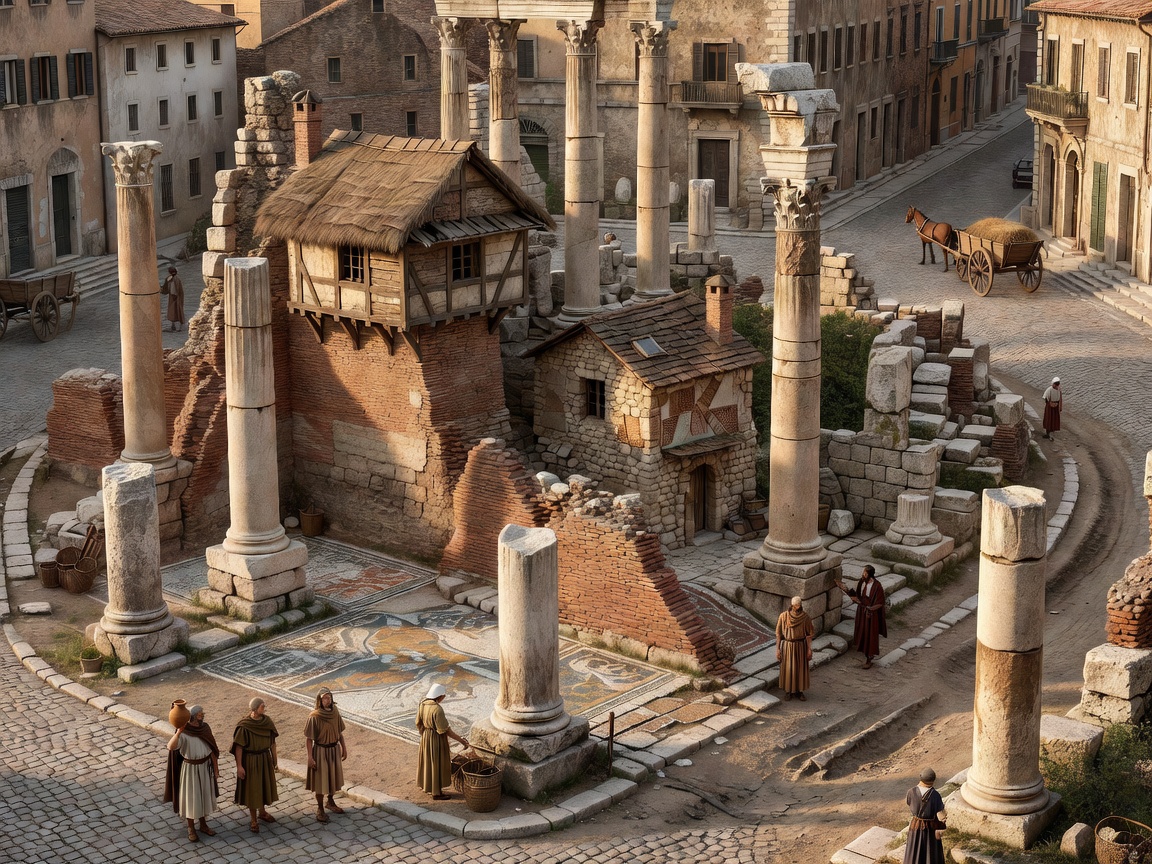
Ancient cities reveal themselves through movement. Athens rewards a route between the Acropolis, Ancient Agora and Kerameikos, where civic life, worship and burial can be understood as parts of one landscape. Rome is less tidy: its Forum, Palatine, Pantheon and imperial baths are separated by busy roads and centuries of building. Split, by contrast, lets you walk through the surviving walls of Diocletian’s Palace while cafés and apartments occupy the old fabric.
Before entering a major monument, spend fifteen minutes looking at the edges. A change in paving, a reused column in a wall or a street that narrows unexpectedly can explain more than a long list of dates. Download an official map where available, and check whether an archaeological park requires a timed entry. Large sites often involve more walking than their map suggests.
Three useful comparisons
Rome versus Athens: Rome offers extraordinary density and a broad chronological range, but its traffic and scale can make connections tiring. Athens has a clearer central archaeological zone and excellent hill views, although summer heat and exposed paths are serious considerations. Pompeii versus Herculaneum: Pompeii is much larger and gives a fuller picture of urban life, including election notices, shops and gardens. Herculaneum is smaller, better preserved in several buildings and easier to cover in a morning. Choose Pompeii for breadth; Herculaneum for intimacy.
Toledo versus Córdoba: Toledo’s steep lanes and fortified position make the city itself the exhibit. Córdoba’s Mezquita-Catedral is the unforgettable centrepiece, while the surrounding streets are flatter and easier to explore slowly. Both reward an overnight stay after day-trippers leave.
Costs, access and comfort
Entry prices change, but major archaeological attractions commonly sit around €12–€25 for adults; combined tickets can be better value if you will use every component. Some state museums offer free periods or reduced rates for young visitors, students and residents—bring the relevant proof. Book only through the site’s official operator when timed entry is required. Third-party tickets may add fees without improving access.
Wear shoes with a firm sole: ancient paving is uneven, polished and occasionally slippery. Carry water, but use refill points where permitted. Shade is limited at exposed ruins, and accessibility varies sharply. Ask ahead about step-free routes rather than assuming a modern visitor centre means a fully accessible archaeological landscape.
How to visit responsibly
Do not climb walls, touch frescoes or sit on fragile masonry. Avoid blocking narrow lanes for photographs, particularly in living historic centres. Choose locally owned accommodation outside the most pressured core and eat at ordinary neighbourhood times. The goal is not to collect a checklist of monuments; it is to understand how people adapted a place, and how the present continues that story.